Case study 03 / 05
Course project · Gamification & Game-Based Learning (DD441/EM441)
Fit4All
A fitness app concept for people with mobility impairments. Most fitness apps reward speed and intensity. Fit4All rewards showing up, so wheelchair users, people recovering from injuries and older adults can build habits at their own pace.
- My role
- Lead UX / Gamification Designer
- Team
- Solo project
- Timeline
- 4 weeks, 2026
- Platform
- iOS concept
- Tools
- Figma, FigJam
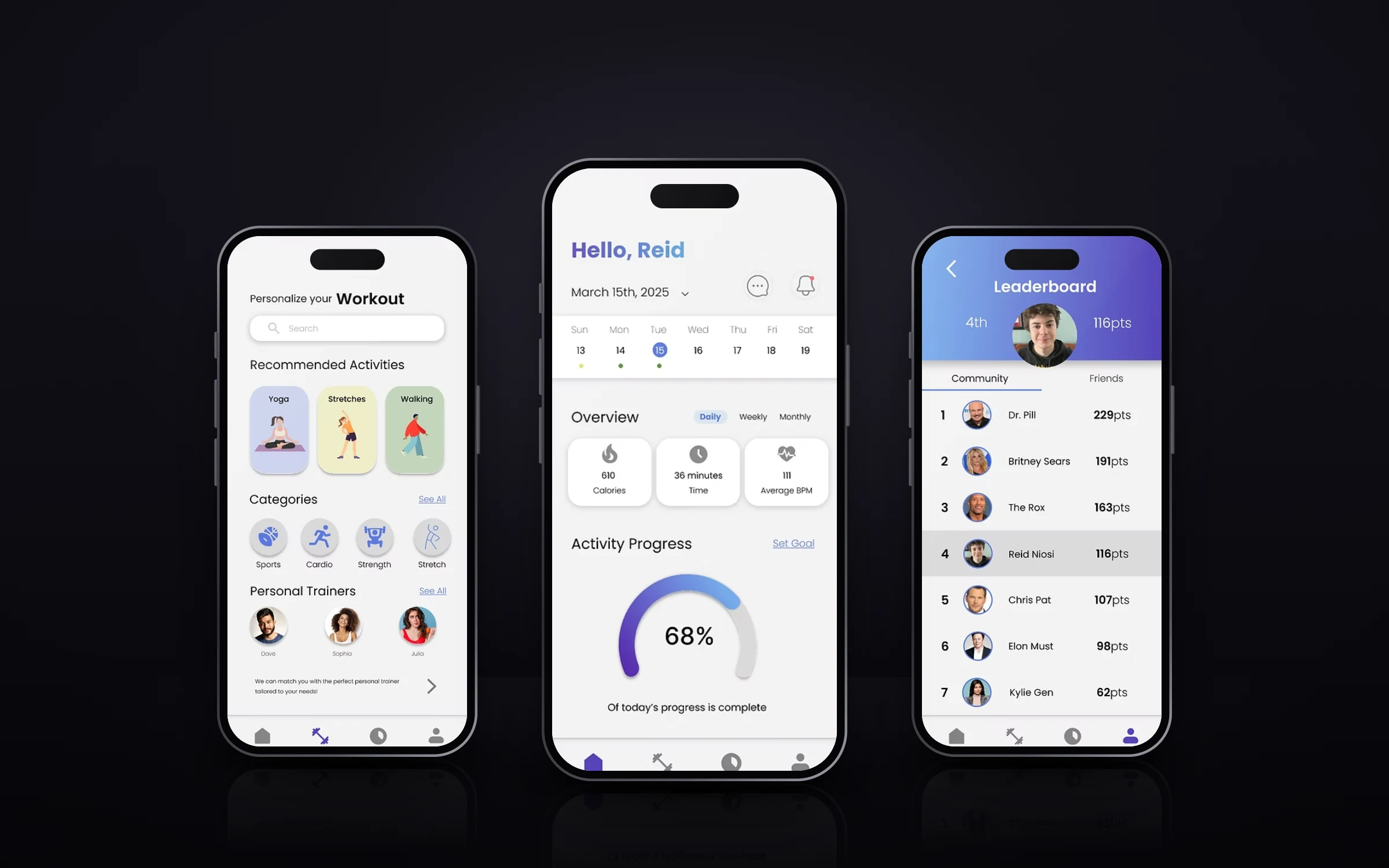
At a glance
The problem
Mainstream fitness apps assume able-bodied movement and reward speed, intensity and competition. People with mobility impairments end up feeling excluded, or unsafe.
My part
I defined three personas, chose the motivation frameworks, and designed the screens and the whole gamification system in Figma.
What happened
A concept prototype with four core screens and a reward system built on participation. It hasn’t been tested with users yet, and that’s the first thing I’d do next.
Problem: Most fitness apps assume you can push harder.
Fitness apps tend to be built around able-bodied movement, high-intensity goals, competitive metrics and one-size-fits-all routines. For someone in a wheelchair, recovering from surgery or living with reduced mobility, that can feel excluding at best and unsafe at worst.
I wanted to see whether gamification could make fitness feel supportive, instead of adding more pressure.
How might we
…redesign the fitness experience for people with mobility impairments through inclusive design and health-focused gamification?
Approach: Three people, and a theory of motivation.
I designed for three personas and grounded the system in Self-Determination Theory (autonomy, competence and relatedness) and Nicholson’s RECIPE framework for meaningful gamification. Bartle’s player types helped me cover people who are motivated by achievement, exploration, socializing or competition.
Wheelchair user or limited mobility
- Needs
- Seated, adaptive workouts, accessible navigation and flexible goals.
- Pain point
- Mainstream apps assume standing movement or full-body mobility.
- Accessibility needs
- Accessibility presets, hands-free controls and personalized recommendations.
Recovering from an injury
- Needs
- Safe progression and workout intensity that adapts.
- Pain point
- Fear of re-injury from generic workout plans.
- Accessibility needs
- AI-adjusted workouts, trainer guidance and safety-conscious recommendations.
Older adult exercising at home
- Needs
- Simple, low-impact guidance and clear instructions.
- Pain point
- Overwhelming interfaces, small text and workouts that expect too much.
- Accessibility needs
- Large UI, voice guidance, saved preferences and low-impact routines.
Insights: Reward effort, not intensity.
Working through the personas and frameworks gave me three rules for the whole design.
Accessibility has to be the foundation.
It can’t be added at the end. Preset and customizable accessibility modes had to shape the core experience, not sit in a settings menu.
Reward participation and consistency.
Rewards based on speed or intensity would push these users toward injury. Rewards based on showing up keep them safe and motivated.
Remove anything that punishes.
Losing a streak or sliding down a leaderboard creates shame. Effort-based feedback and optional competition protect people’s confidence.
Design: Progress you earn by showing up.
Four screens carry the experience: a daily dashboard, personalized workouts, a profile with achievements, and a leaderboard that ranks participation rather than performance.
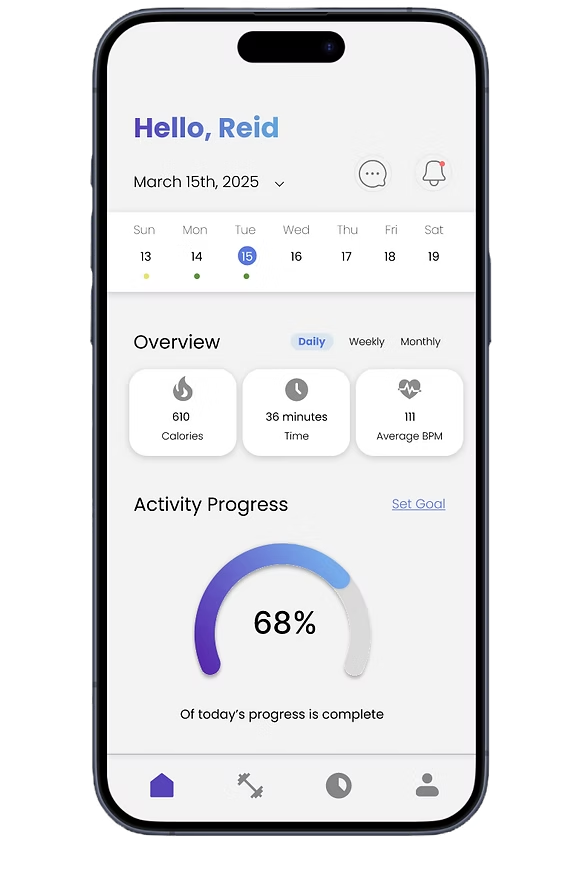
Home: calories, workout time, average BPM and a progress ring, so progress is visible at a glance.
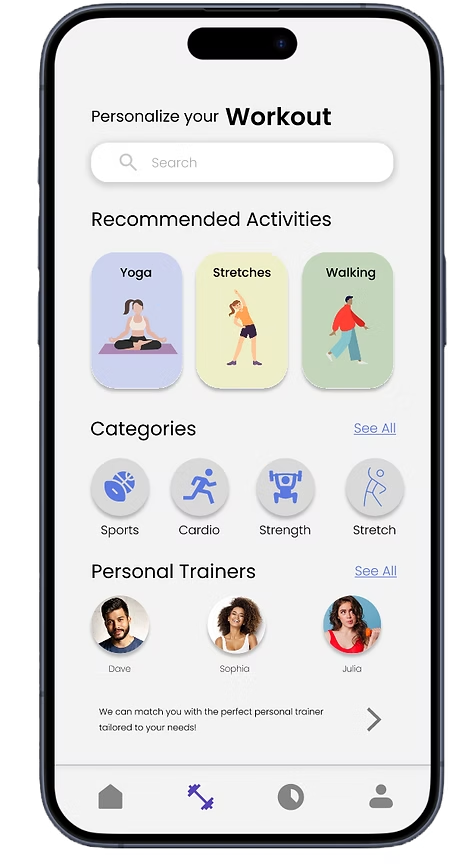
Workouts: search, recommendations, categories and trainers, so people pick what feels safe.
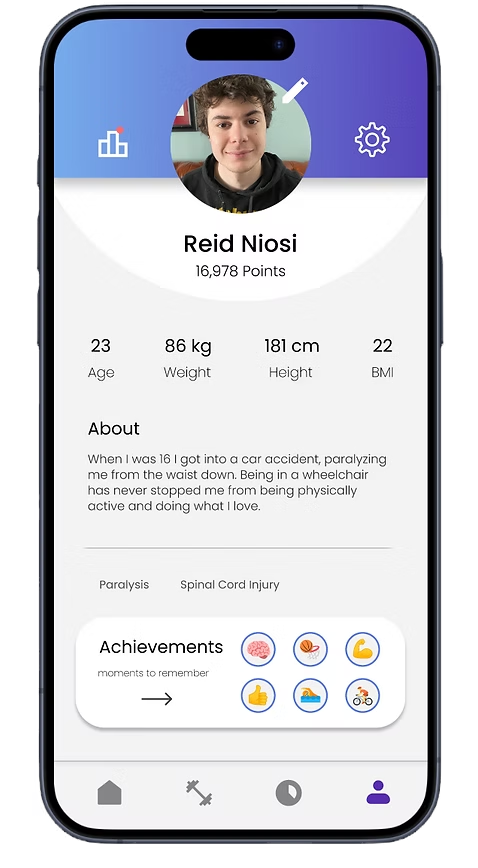
Profile: stats, points, accessibility details and badges for consistency.
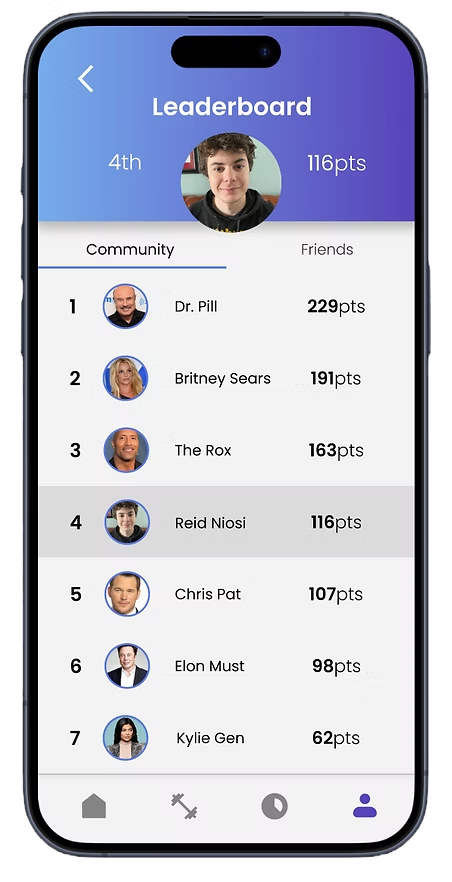
Leaderboard: ranks engagement, not speed, with friends and community tabs.
How the reward system works
- Points
- Earned for workouts, logging in, streaks, goals, trying routines and talking to trainers. They reward consistency and curiosity.
- Levels per activity
- Yoga, cardio, strength, stretching and aqua aerobics each level up separately, so no one gets pushed too fast in one area.
- Achievements
- Badges for first workouts, streaks, new categories, friends, trainers, events and milestones.
- Journey tracker
- Daily, weekly and monthly progress in bars, calendars and graphs, to show how far someone has come.
The decisions behind it
Separate levels by activity.
People build confidence in each kind of workout without being pushed into movements that don’t suit them.
Make competition optional.
The leaderboard is there for people who like social motivation. Everyone else can track progress privately.
Design achievements for different motivations.
Badges cover achievers, explorers, socializers and competitive people, so there’s something for each.
Put accessibility in the main flow.
It shapes onboarding, recommendations, goal setting, trainer support and progress tracking, instead of hiding in settings.
Accessibility features
- Workout recommendations that adapt to ability, injuries, mobility needs and preferences.
- Presets for seated workouts, low-impact movement, voice guidance, larger text and simpler navigation.
- Personal trainers for guidance, accountability and safer planning.
- Large cards, simple navigation, recognizable icons and generous spacing.
- Levels that rise gradually to reduce pressure and prevent overexertion.
Outcome: A concept, not a shipped product.
Fit4All is a concept prototype from a four-week course project. I haven’t tested it with users, so there are no results to report. Before anyone built it, it would need:
- Usability testing with people who have mobility impairments.
- Accessibility checks with people who use assistive technology every day.
- Expert review of the workout recommendations from trainers, physiotherapists or healthcare professionals.
- Testing to make sure the leaderboard motivates without creating pressure.
- Stronger onboarding for different disability, injury and mobility profiles.
Reflection: Inclusive design starts with the first decision.
Fit4All taught me that inclusive design isn’t about adding accessibility at the end. It means rethinking what motivation, progress, competition and success look like from the start.
It also showed me how easily gamification can backfire. Points, badges and leaderboards can motivate people, or discourage them if they’re built around comparison and unrealistic expectations.
If I kept going
- Test the prototype with people with mobility impairments, older adults and people recovering from injuries.
- Work with adaptive fitness trainers or physiotherapists on safer recommendations.
- Add voice control, screen reader support, larger text modes, haptic feedback and simpler navigation.
- Explore FitBuddy, an assistive AI that could help people adjust workouts and set goals safely.
- Study whether the system helps people keep fitness habits over weeks or months.
Fit4All reflects how I like to design: start with the people mainstream products leave out, then make the experience safe, adaptable and motivating for them.