Case study 05 / 05
Course project · DEI 613 · Speculative design
Human Intelligence
A speculative design project set in 2050, when AI agents handle most of our conversations. Our team of three designed HI, an AR contact lens that rewards people for talking to each other and lets them choose how much AI help they get.
- My role
- UX Designer
- Team
- Carley Kerby, Kate Fretz, Sanaa Khalil
- Timeline
- 4 weeks, 2025
- Platform
- AR contact lens (speculative)
- Tools
- Miro, Figma Make, Google AI Studio, ChatGPT, Sora
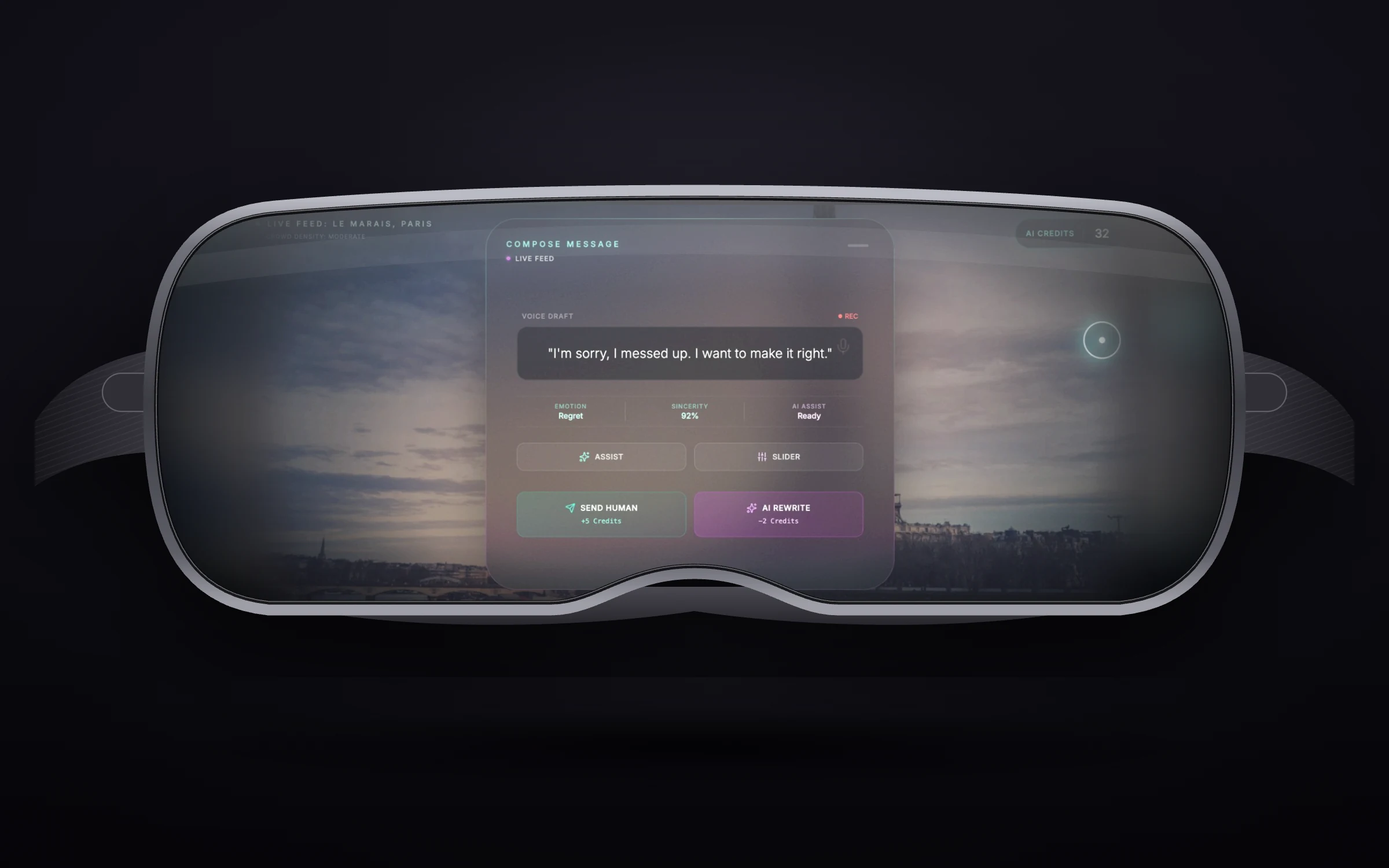
At a glance
The problem
In our 2050 scenario, AI writes our messages and smooths over every hard conversation. People are constantly connected, and losing the confidence to talk to each other directly.
My part
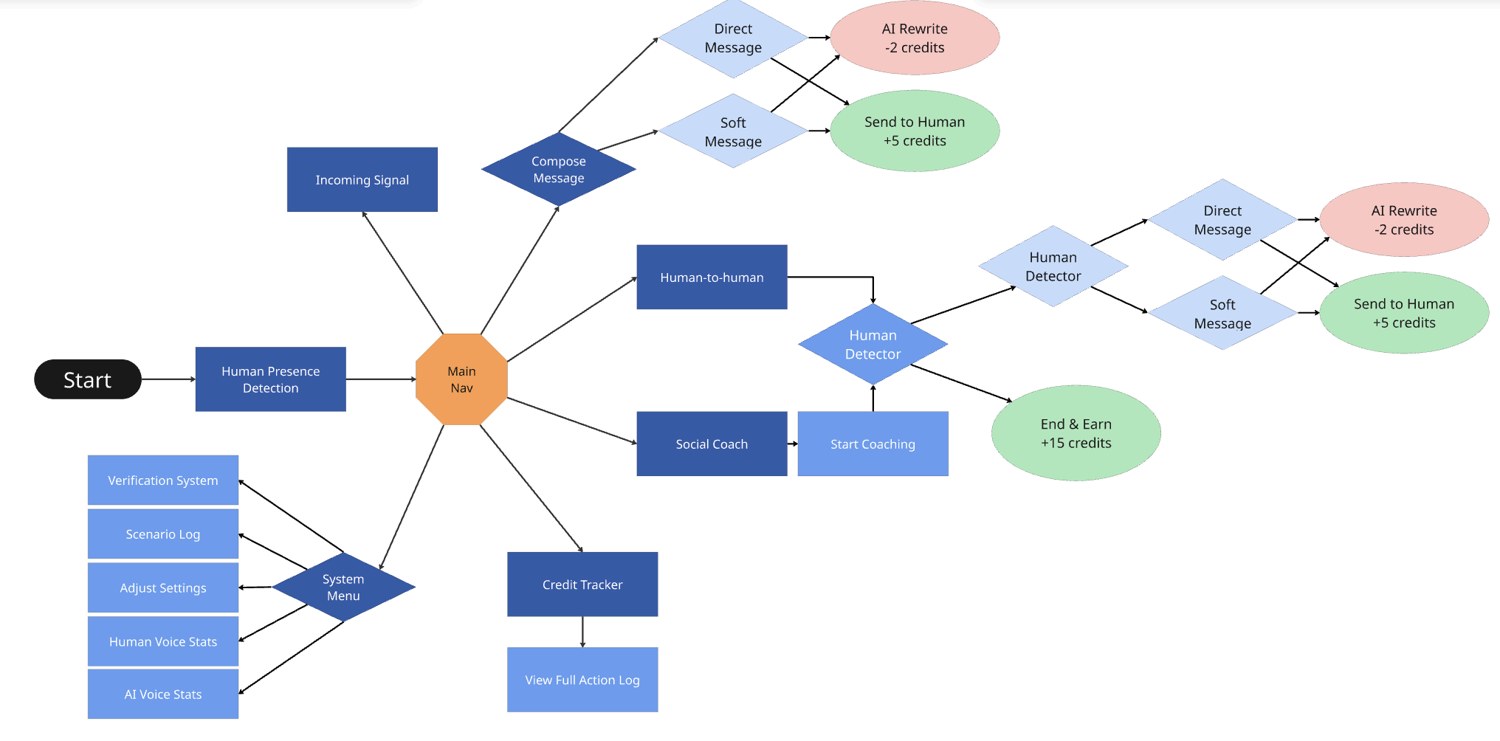
I developed the AI-enhanced personas, made the low-fidelity wireframes and the user flow, and worked on future casting, ideation and refining the prototype after critique.
What happened
A prototype of the HI lens with five features, from authenticity detection to Human Credits, plus the ethical questions it raises. It’s a provocation, not a product.
Problem: What happens when AI does most of the talking?
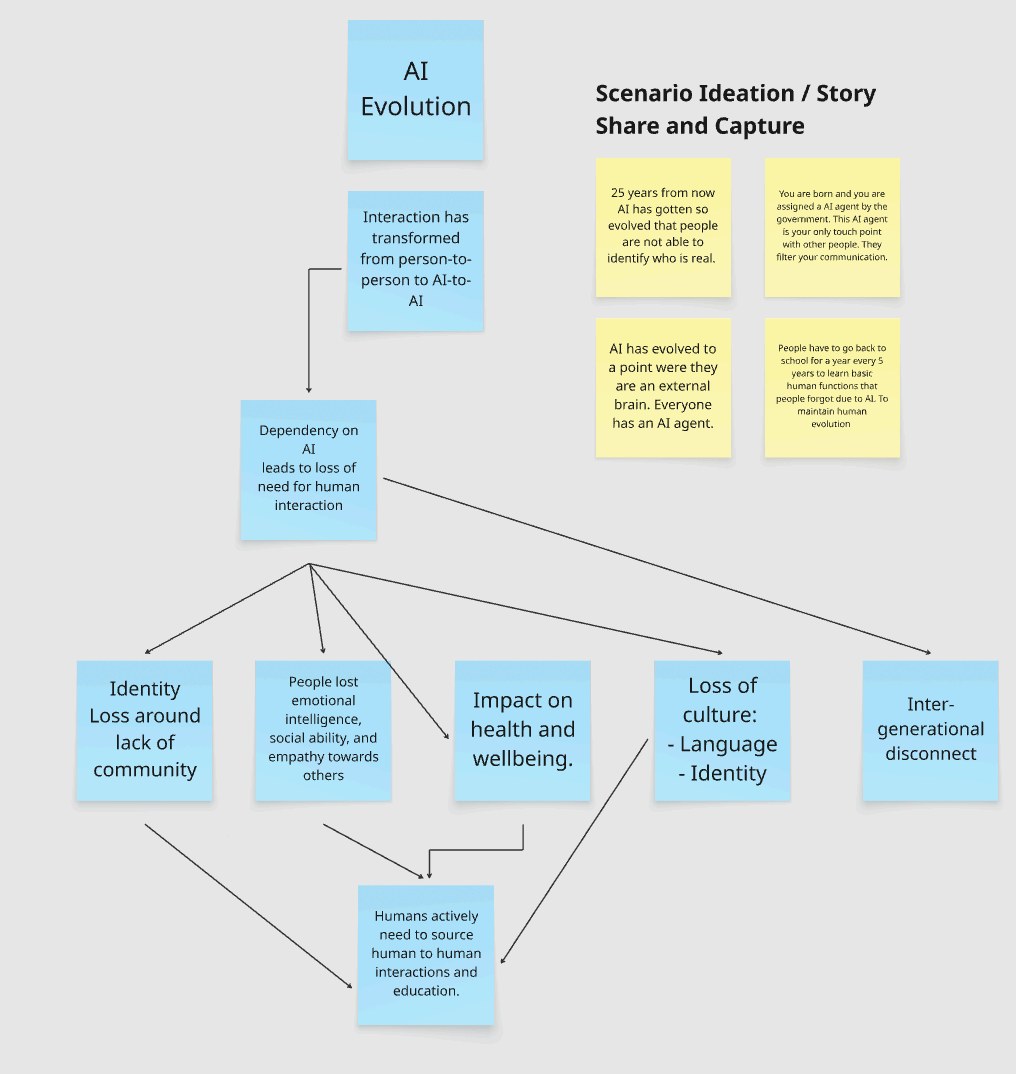
We imagined a future we called the emerging asocial society. Personal AI agents write messages, manage relationships, negotiate conflict and interpret emotions. It’s efficient, and emotionally distant.
With fewer chances to practise, people lose confidence in direct conversation and emotional expression. And because AI voices and avatars are so convincing, it gets hard to know who you’re actually talking to.
- AI-mediated communication
- Agents handle conversations, emotional tone, scheduling, work negotiations and social life.
- Declining social skills
- With AI smoothing over conflict, people rarely practise empathy, vulnerability or spontaneity.
- Ambiguous authenticity
- Synthetic speech, avatars and messages make it hard to tell a human from an algorithm.
- Regulated digital society
- Governments regulate AI communication, emotional data, identity verification and access to virtual spaces.
How might we
…design a digital tool or experience that helps people rebuild social skills and emotional intelligence in 2050, after decades of relying on AI to communicate?
Approach: Three people living in 2050.
We future-cast with infinity and scenario mapping, then built three personas across generations and cultures. I developed them through structured prompt engineering, iterating on emotional context, pain points, cultural tensions and AI reliance until they felt specific and believable.
We ideated together in Miro and voted on the strongest direction, then moved from low-fidelity wireframes and a user flow to a medium-fidelity prototype. After critique, we switched from Figma Make to Google AI Studio to build a more functional final version.
Lian Torres, 19, Manila
A university student who has grown up with AI shaping her tone, schedule and social life. She’s always connected, but anxious in unscripted conversation.
Needs
Safe chances to practise unfiltered conversation, and support for social anxiety that doesn’t replace her.
Amadou Toure, 47, Paris
A community liaison whose AI handles most of his negotiating at work. He feels overshadowed there and misunderstood at home, and wants to reconnect with his kids.
Needs
Help with hard conversations that doesn’t overwrite his personality or make him feel watched.
Elena Marković, 72, Zagreb
A retired archivist living alone with a government AI caregiver. Her children mostly reach her through algorithms instead of their own voices.
Needs
Easy, human-centred ways to communicate, and proof that a message really came from a person.
Insights: Each person needed AI to step back in a different way.
None of our personas wanted AI gone. They needed it to support them without speaking for them, and each needed something different.
Lian needed somewhere safe to practise.
A bridge between full AI dependence and fully unscripted conversation.
Amadou needed support that kept his voice.
Help in emotional moments that wouldn’t flatten his personality.
Elena needed proof it was really a person.
Reassurance that the people and messages reaching her were human.
Why a contact lens
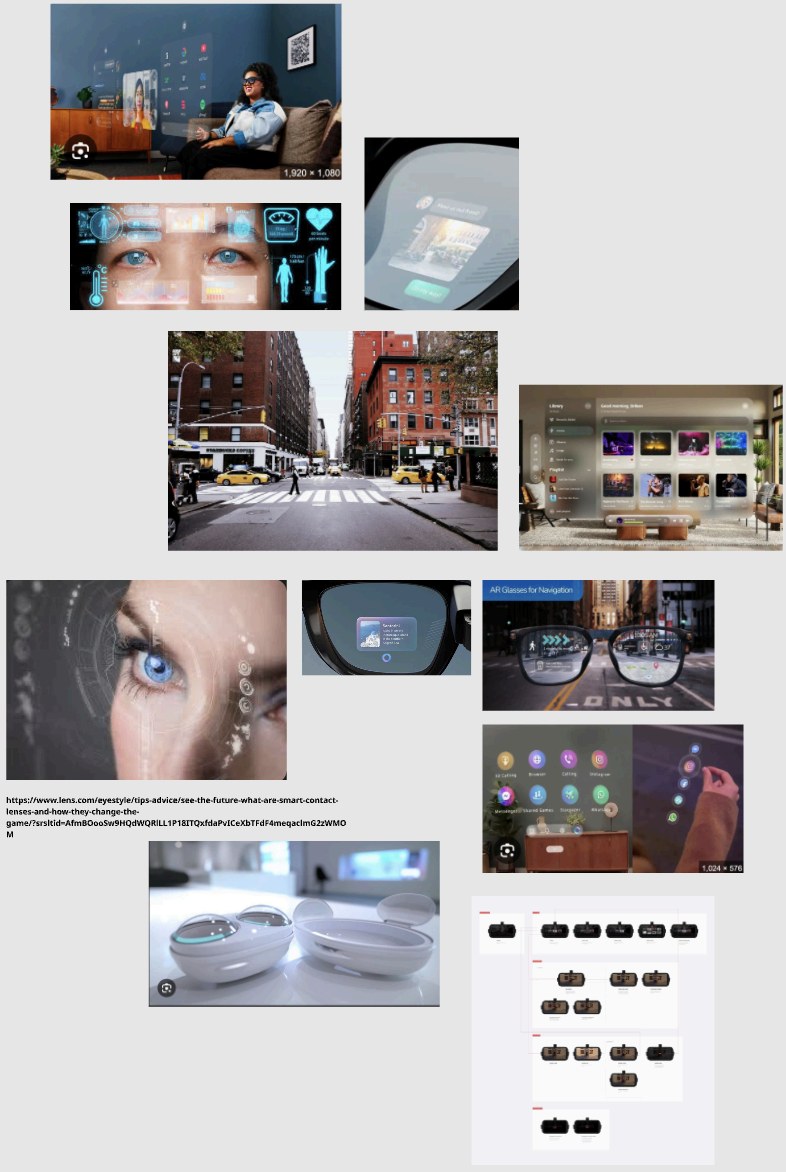
In our scenario, AR lenses have replaced screens as the main way people handle identity, communication and AI help. A lens can guide you hands-free without breaking eye contact, read real-time context like tone and presence, and confirm whether you’re talking to a person or a synthetic avatar. A phone can’t do that in the middle of a conversation.
Design: Talk to people, earn Human Credits.
HI is a government-led AR lens that tracks real human interaction and rewards it. When you speak for yourself, you earn Human Credits, which you can spend on supportive AI tools when you need them. The point isn’t to remove AI. It’s to rebuild trust in your own voice.
The concept in one line: “Be human. Learn with guidance. Reconnect with confidence.”
Authenticity detection
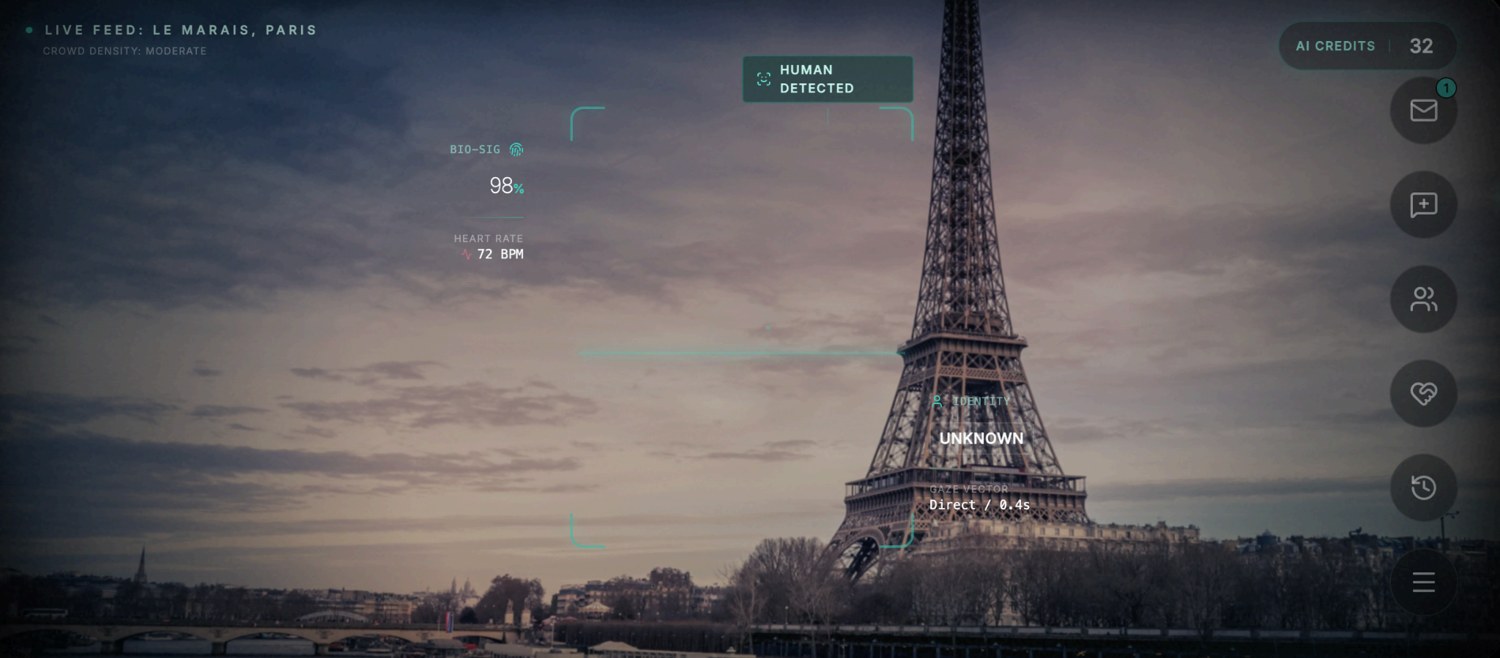
Confirms you’re talking to a real person, not an AI agent, synthetic voice or generated avatar. Built for Elena.
Human / AI mediation slider
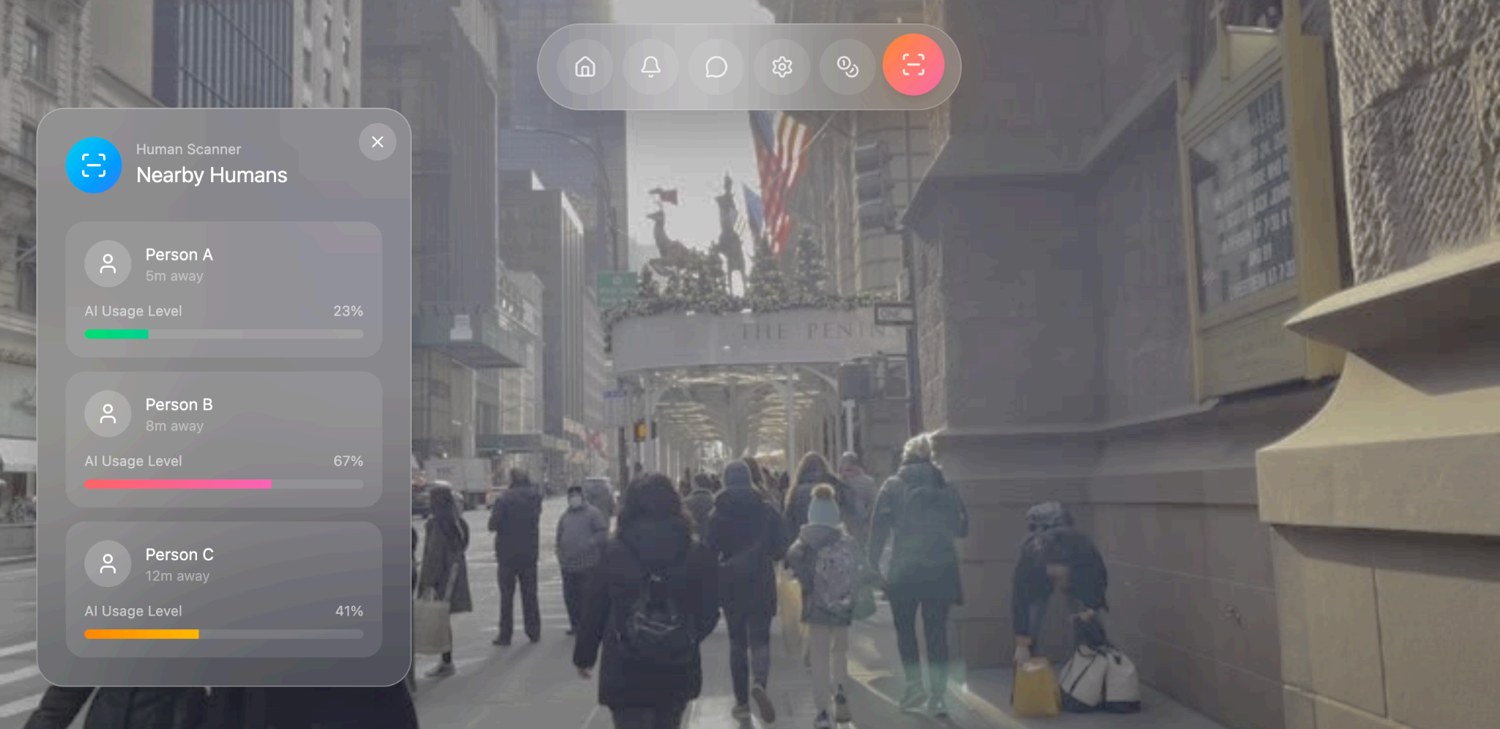
Choose how much AI shapes what you say, from “Mostly Me” to light polish to heavier help. Built for Lian.
Human Credits
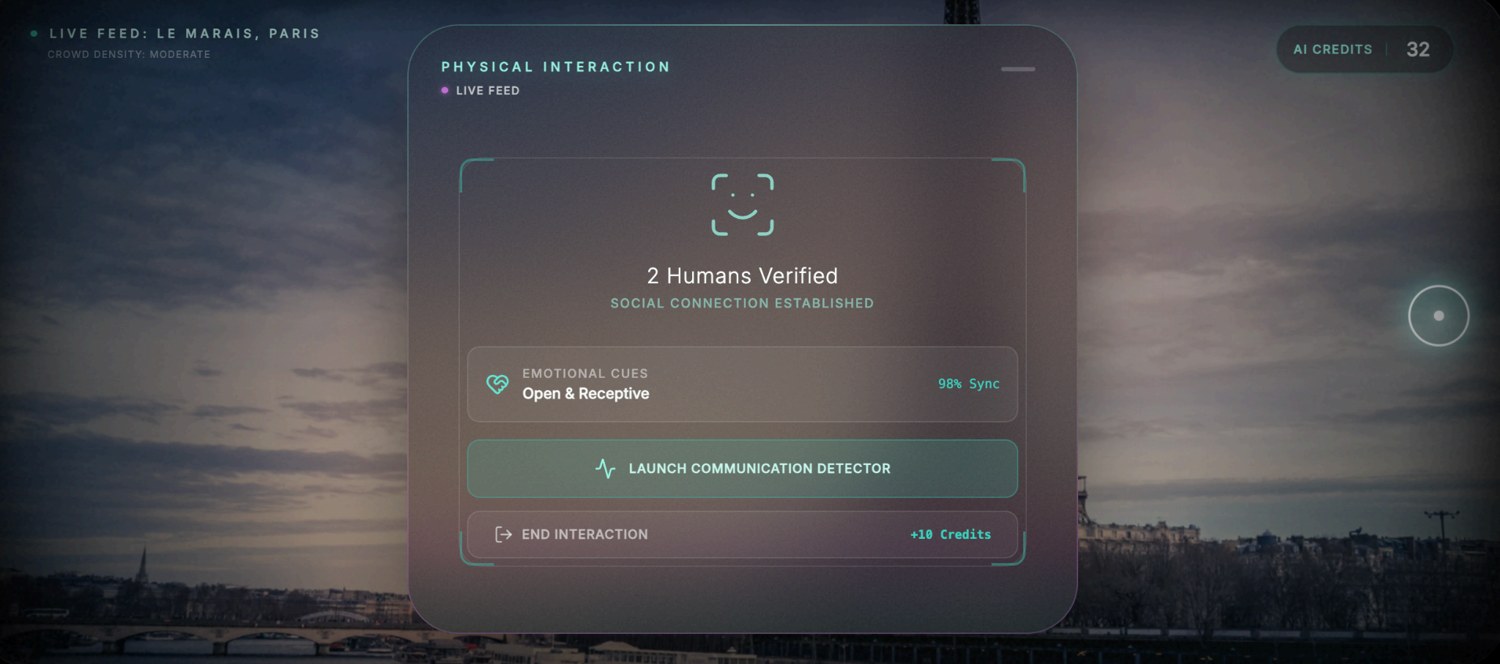
Earned through verified human contact and spent on AI tools, so support is tied to practising. It rewards effort, not performance.
Social coaching
Gentle real-time support in tense moments, without replacing your voice. Built for Amadou.
Scenario log
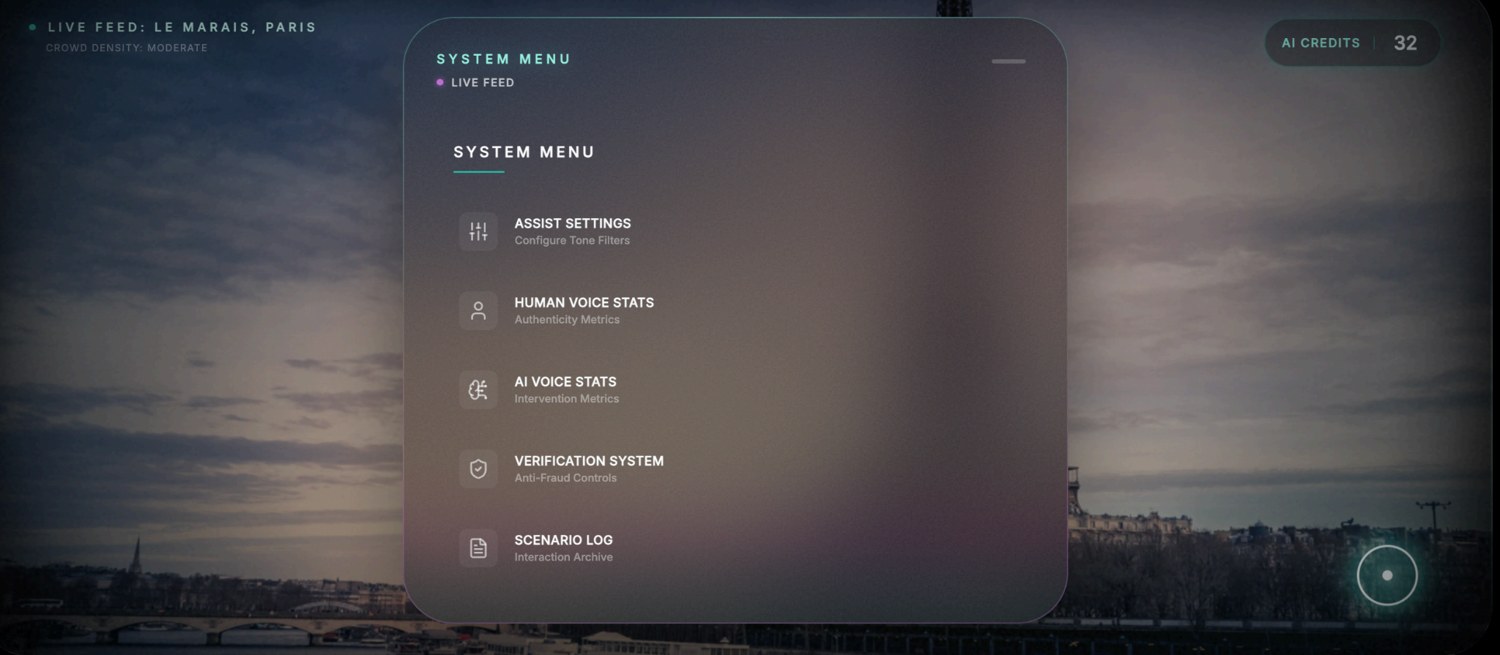
Tracks human contact, AI reliance and communication choices over time, so you can see your own patterns.
Walking through it
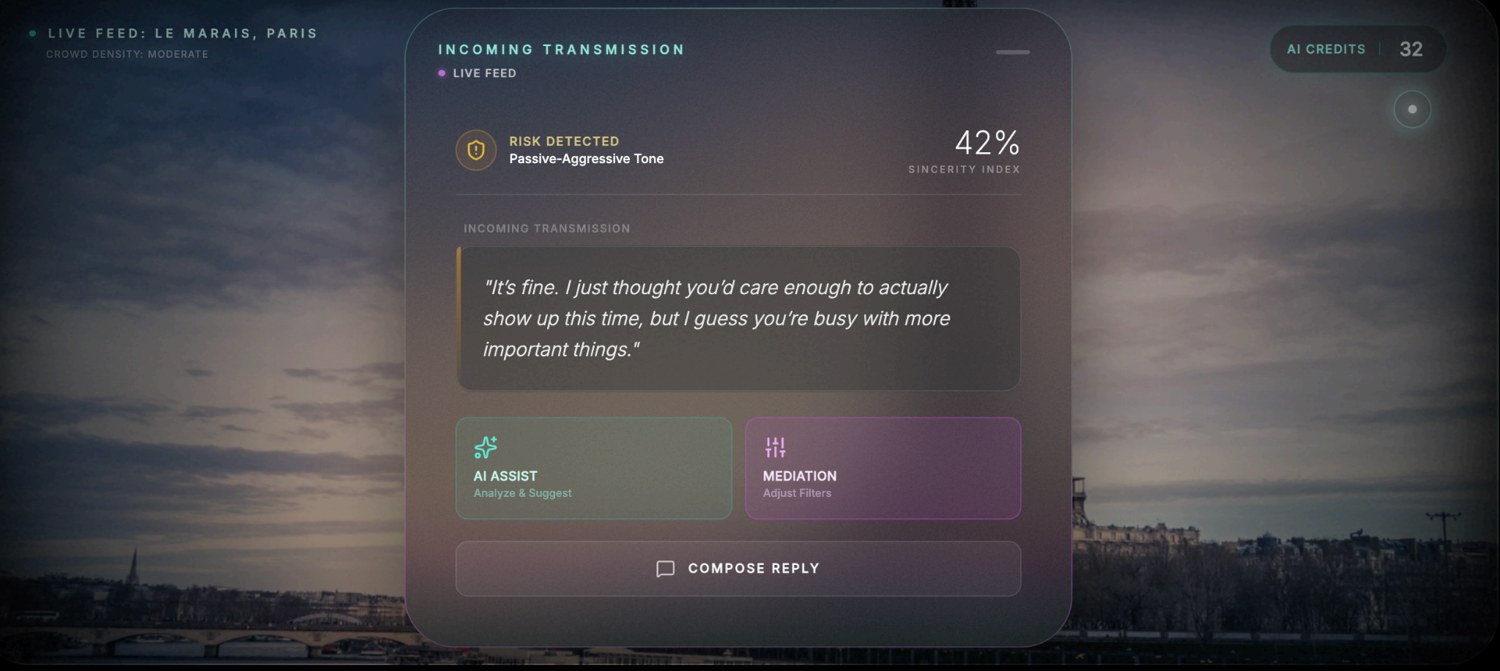
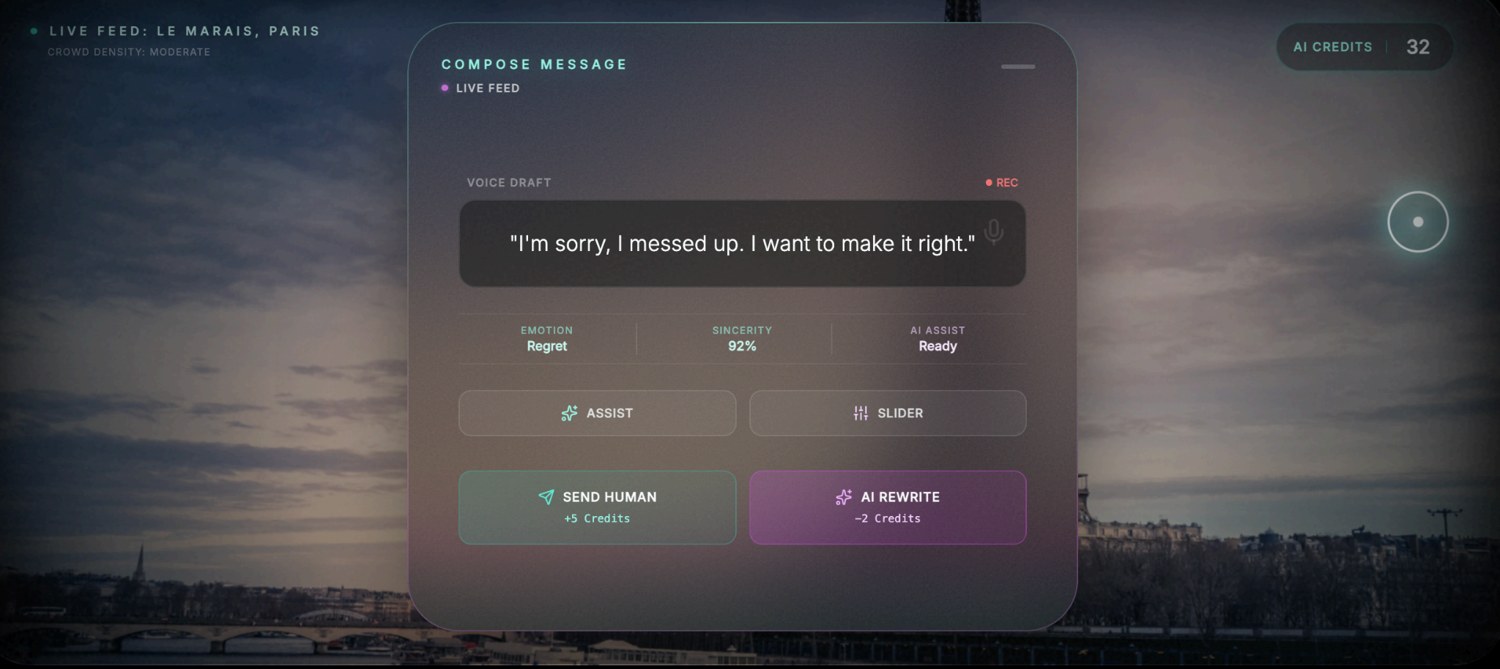
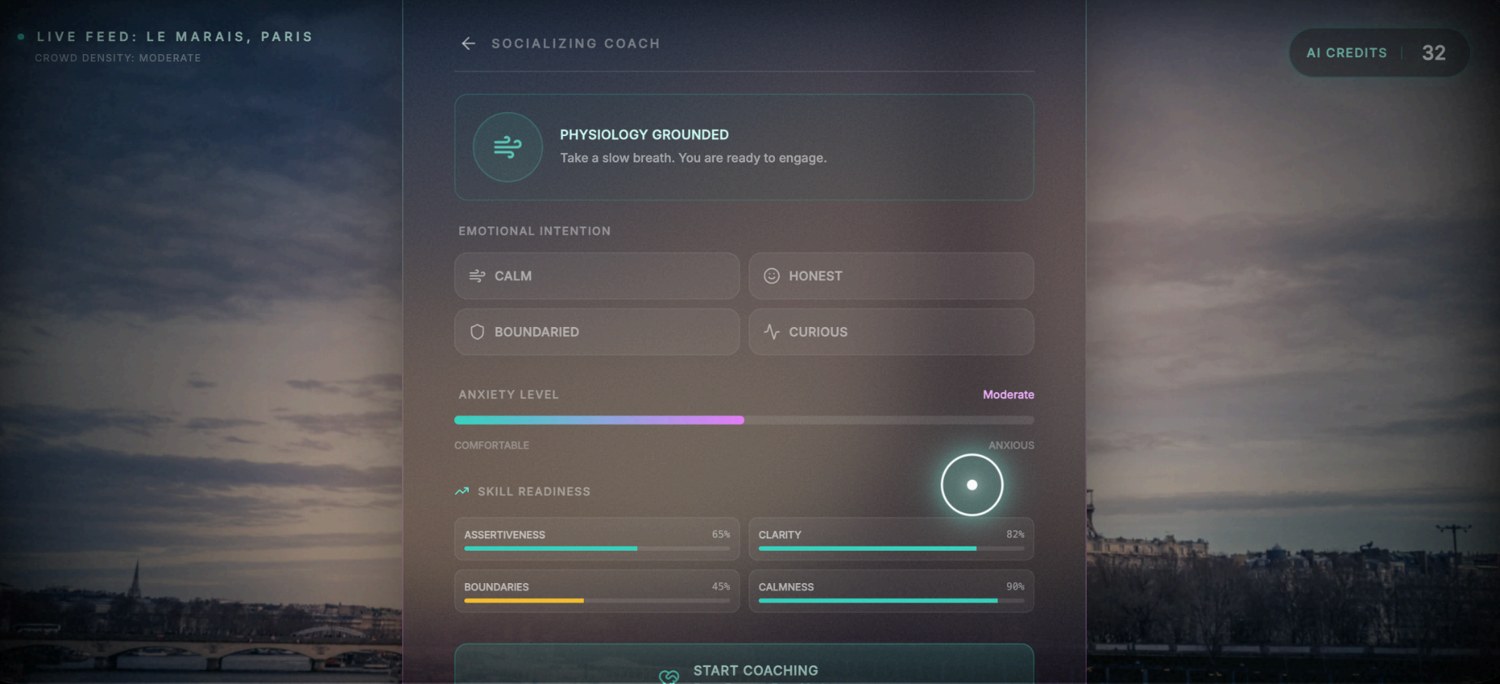
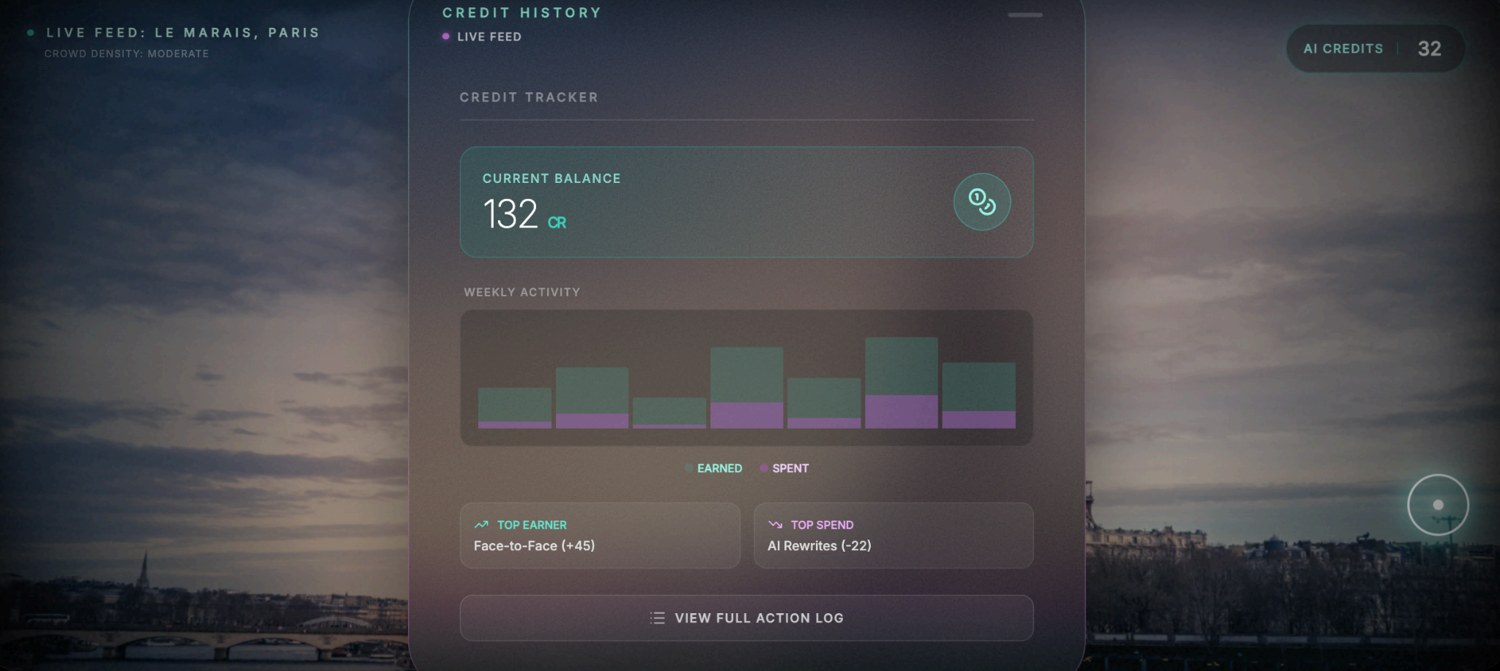
Keeping the lens quiet
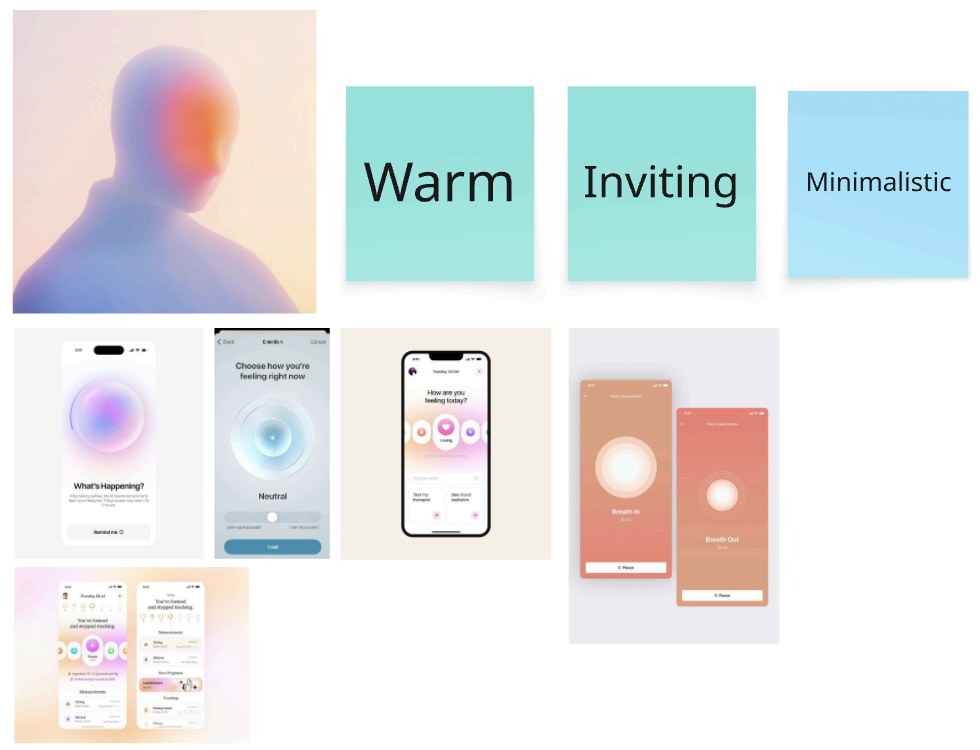
Because HI sits inside your field of view, the interface had to support the conversation without overpowering it. We kept it minimal, warm and ambient: soft transparent panels, small widgets, subtle glow and low-distraction overlays, with a clear hierarchy for social and emotional cues.
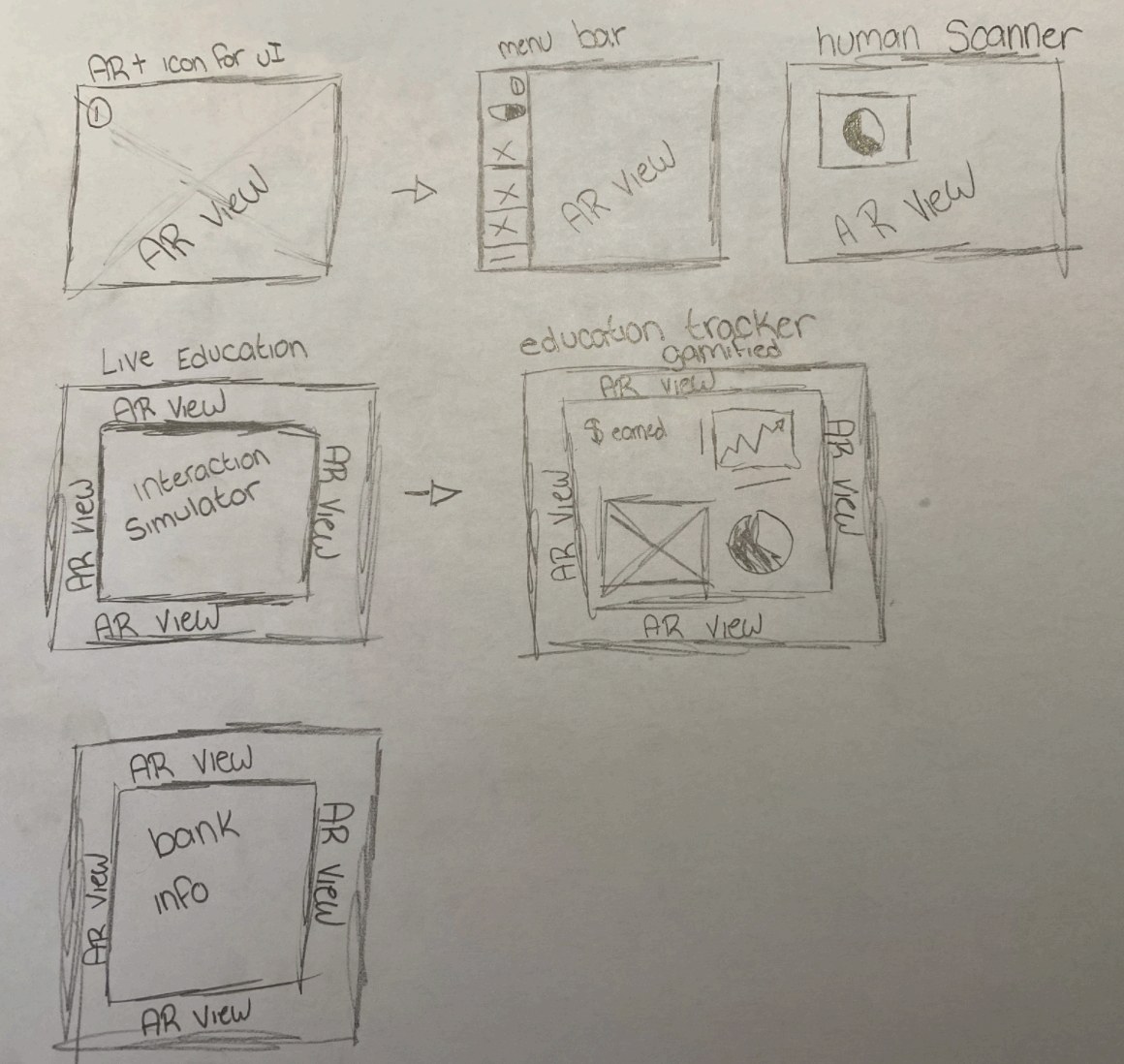
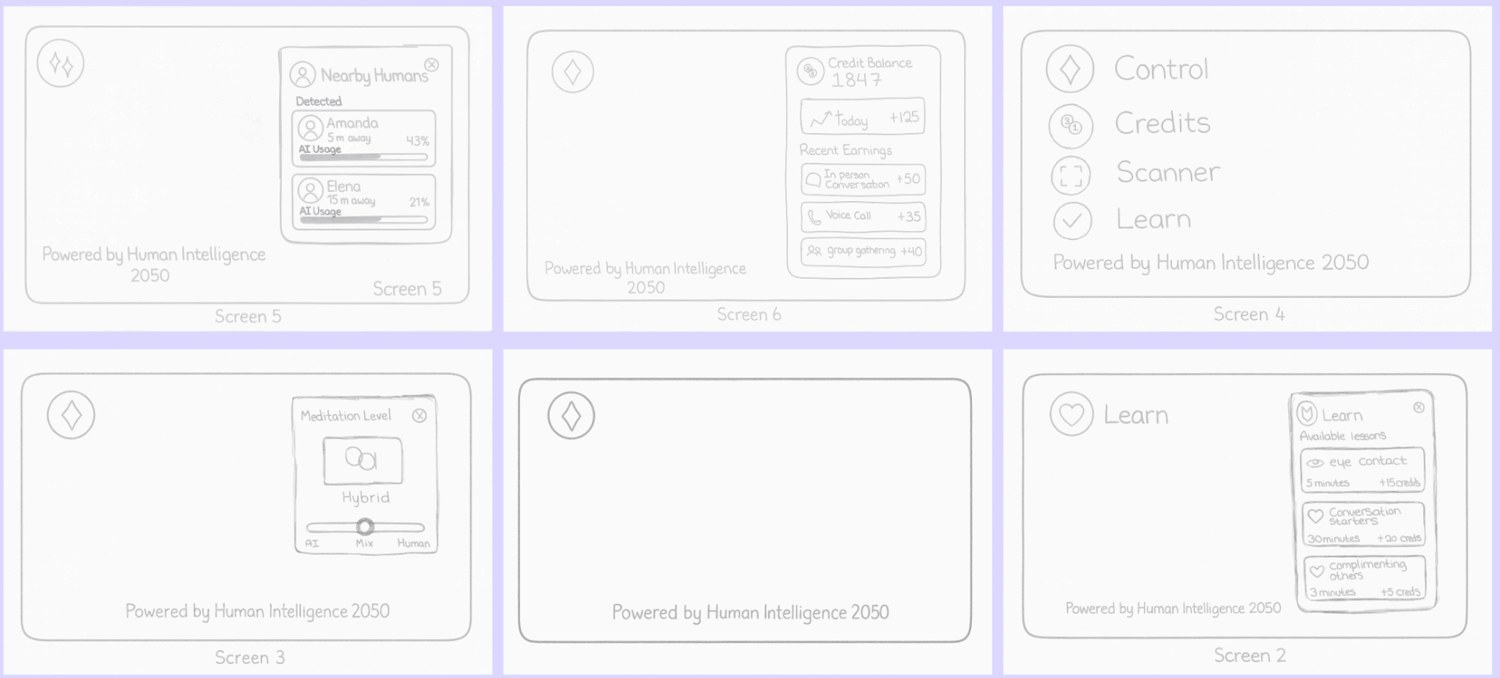
Outcome: A provocation, not a product.
The final prototype covers the home view, incoming messages, composing a reply, human verification, social coaching, credit tracking and settings. Five decisions shaped it:
Support human communication, don’t replace it.
HI gives people scaffolding to rebuild confidence in their own voice.
Reward emotional effort.
Credits go to verified human contact, not popularity or productivity.
Make AI support adjustable.
People have different comfort levels, so they choose how much help they get.
Prioritize trust.
Authenticity detection answers a future where you can’t tell what’s human.
Keep AR subtle.
Guide people without crowding the conversation or replacing real presence.
The questions it raises
HI deals with emotional data, government regulation and human behaviour, so ethics were central. We used these questions to position it as a provocation rather than a perfect solution:
- Who controls the data the lens collects?
- Should governments regulate access to AI support?
- Could a credit system create social pressure or inequality?
- How does authenticity detection avoid becoming surveillance?
- How do you support people without manipulating their emotions?
- What happens when “being human” becomes something measured?
Reflection: AI should be a scaffold, not a replacement.
HI pushed me past app design into how technology shapes behaviour, relationships and society. Speculative design let us question a future before it happens, and ask what gets lost when communication becomes too automated.
My biggest takeaway: designed responsibly, AI can help people rebuild confidence and trust. But concepts like HI also show the risk of measuring, regulating or gamifying human behaviour too aggressively.
What’s unresolved, and what I’d do next
- The concept needs validation with real people across age groups, especially around AI mediation and authenticity detection.
- AR contact lenses are speculative, so feasibility would need research.
- Authenticity detection raises privacy and surveillance concerns that need a clear ethics framework: privacy, consent, emotional data and government involvement.
- Explore how the lens would work for people with visual, cognitive, emotional or social accessibility needs.
- Build a more interactive prototype of real-time tone mediation, credit tracking and coaching.